
These Giant "Super-Puff" Planets Are Less Dense Than Cotton Candy!
Language
Reading Level
Listen to Article
Alignment
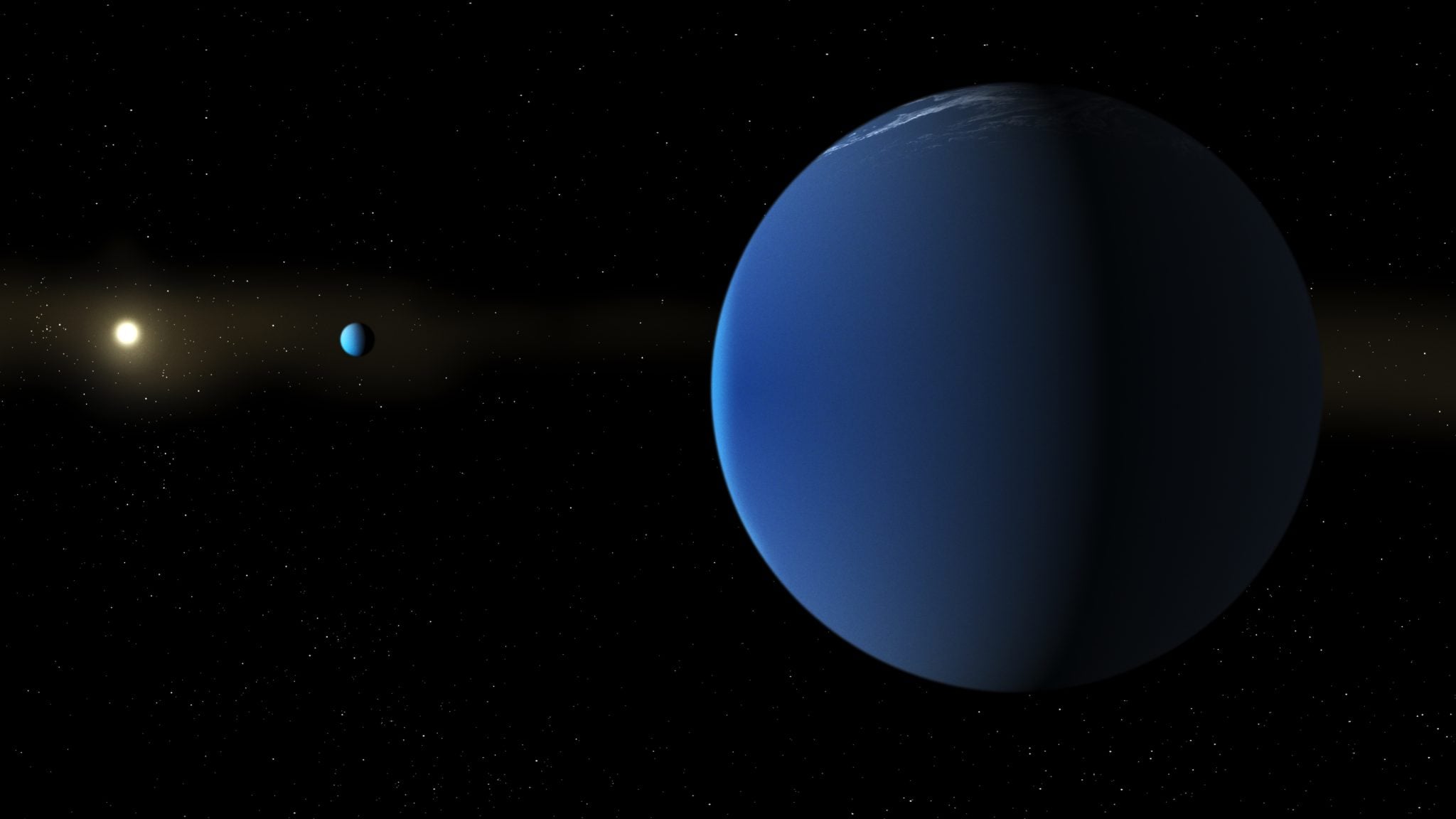
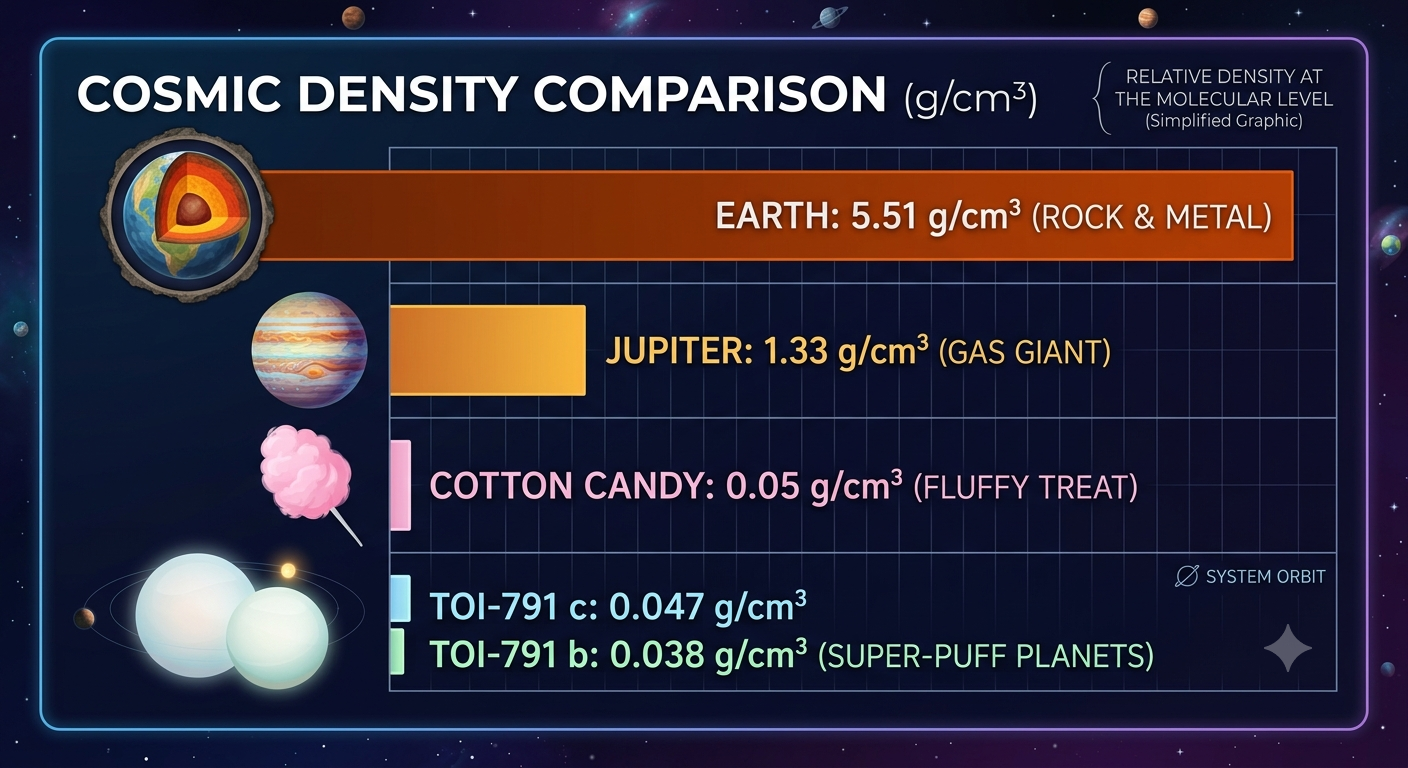
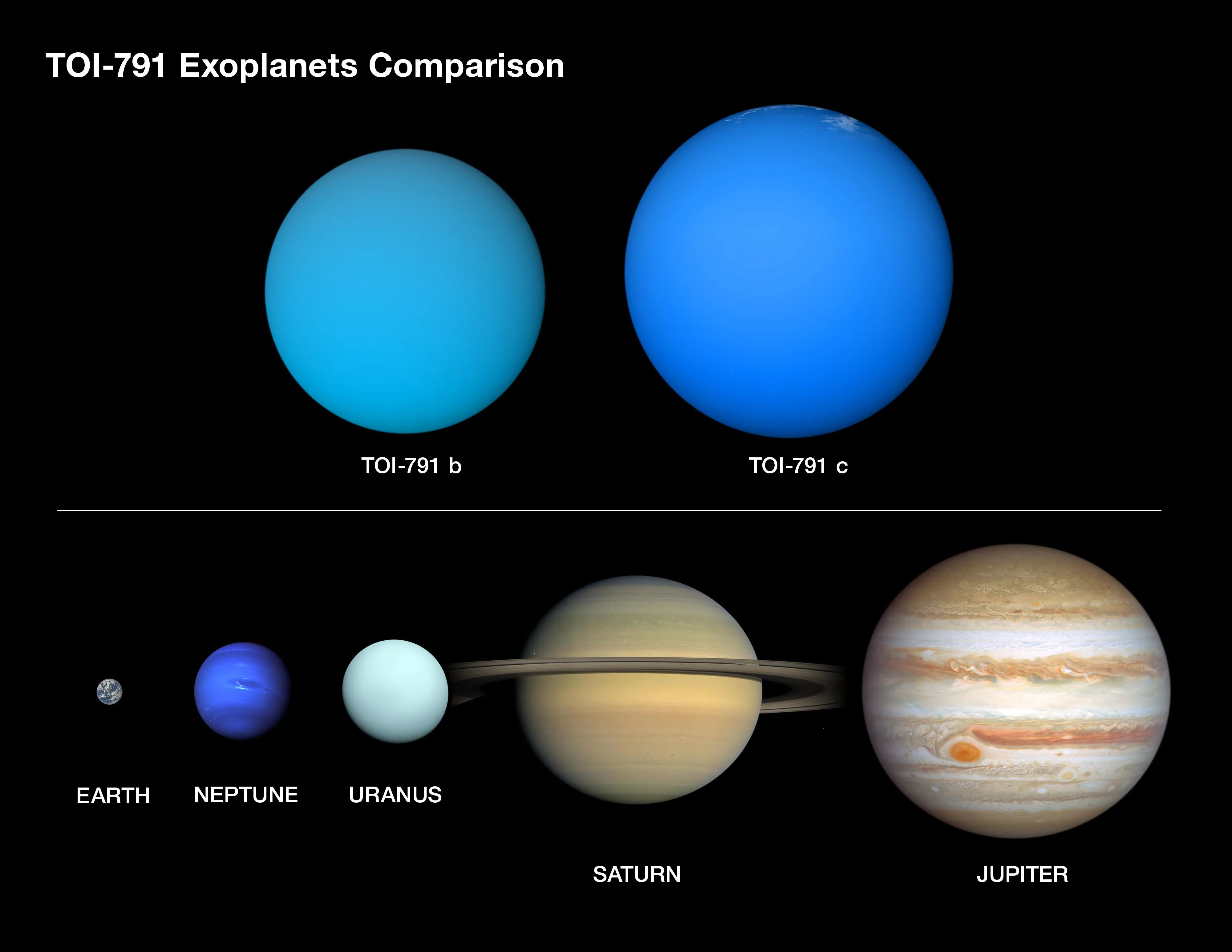
Astronomers have found a pair of Jupiter-sized exoplanets that are less dense than cotton candy. Named TOI-791 b and TOI-791 c, they orbit a Sun-like star about 1,113 light-years from Earth. The two belong to a rare class of planets known as "super-puffs."
"Only a handful of these super-puffy planets are known, and it is even rarer to find two in the same system. Their extremely low densities make them fascinating targets for understanding how planetary systems form and evolve," said Dr. George Dransfield, who led the study.
The first clues about the planets came from volunteers studying data from NASA’s TESS space telescope. They noticed tiny dips in a star’s brightness over time. These dips suggested that planets might be passing in front of the star.
To confirm the discovery, Dr. Dransfield and her team used several telescopes around the world. The ASTEP observatory in Antarctica was especially helpful because of its location. The continuous darkness of the Antarctic winter allowed them to record several complete transits. Each transit — the period during which a planet crosses in front of its star and blocks some of its light — lasted more than 11 hours. These were the longest complete planetary transits ever observed from the ground.
The team measured the planets' sizes by studying the changes in the star's light during each transit. They then calculated the planets' masses by analyzing how their gravity affected each other's orbits. Together, these measurements showed that the planets are extremely low-density worlds.
The two super-puffs orbit their star in a repeating pattern. For every five orbits the inner planet completes, the outer planet completes three. This suggests the two planets formed together from the same disk of gas and dust around their star. The findings were published in the Monthly Notices of the Royal Astronomical Society on June 25, 2026.
Scientists are still not sure how these super-puffs form. One leading theory is that they have large amounts of hydrogen and helium gas around small solid cores. These thick atmospheres would make the planets appear much larger than they really are while keeping their overall density extremely low.
Dr. Dransfield and her team hope to solve this mystery by studying the atmospheres of TOI-791 b and TOI-791 c using the James Webb Space Telescope. They hope this information will help explain how super-puff planets form and change over time.
Sources: Space.com, NASA.gov, Colorado.edu
Cite Article
Learn Keywords in this Article

4 Comments
 florathesylveonabout 2 hoursi love space, that is really cool
 oniguriabout 3 hoursts planets looks different than a earth ._.'''
- hedivila-178611339825about 3 hoursvery cool
- oniguriabout 3 hoursalthough u can see tol-791 c that looked different than a earth