
Medieval City Found Beneath Lake Issyk-Kul In Central Asia
Language
Reading Level
Listen to Article
Alignment
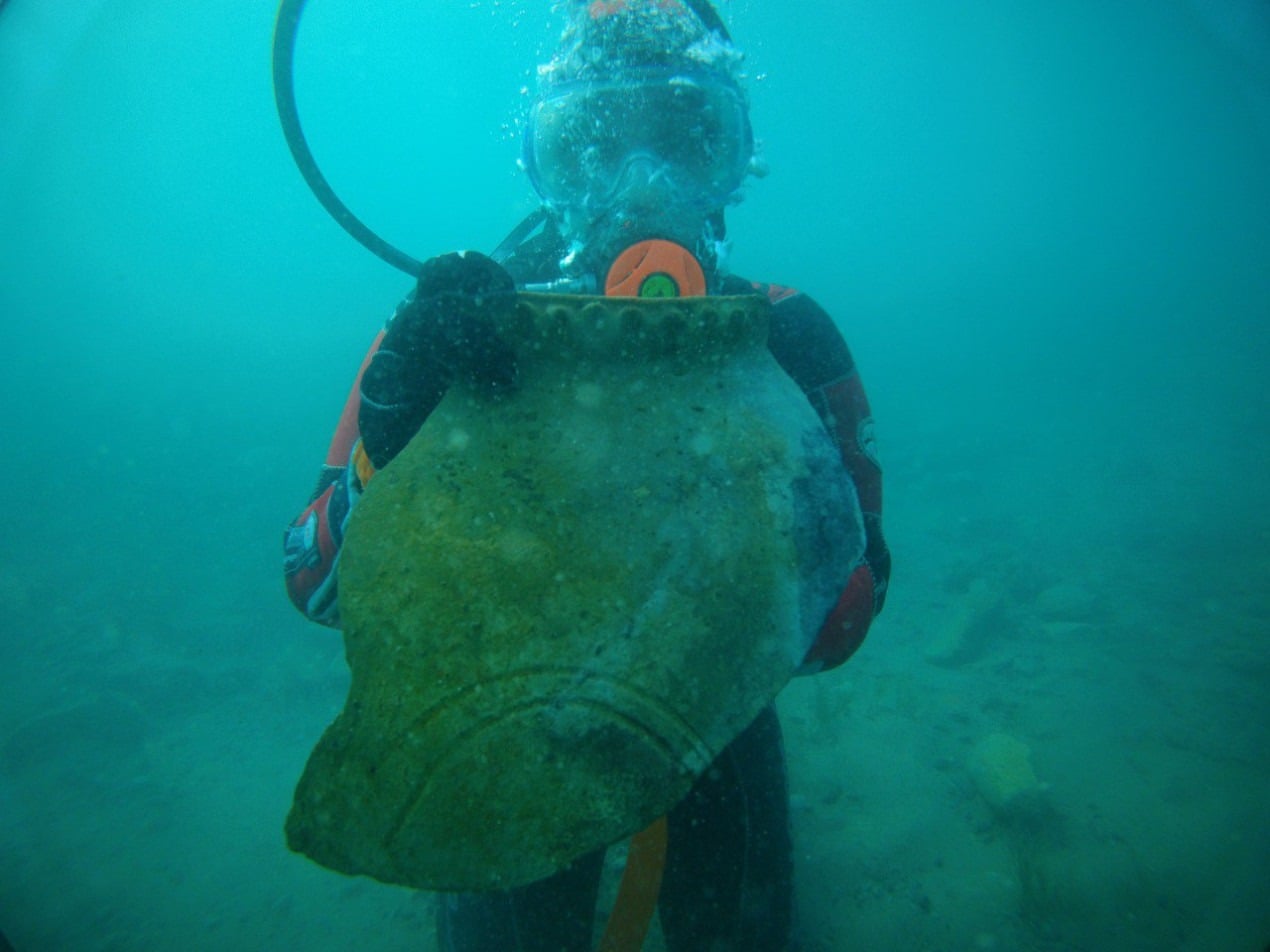
Archeologists from the Russian Academy of Sciences have uncovered an ancient city submerged in Lake Issyk-Kul in Kyrgyzstan, in Central Asia. Revealed on November 18, 2025, the site matches the location of an ancient settlement called Toru-Aygyr. The city flourished from around the 10th to the 15th century. Experts believe it was an important stop on the Silk Road. This was a network of trade routes connecting East Asia with the Mediterranean.
Historic records indicate that Toru-Aygyr was once a multicultural city, where people practiced several religions. But by the 13th century, Islam had become the main religion. That influence is reflected in the four submerged areas explored by divers. In the first, they found remains of brick structures. Among them was a stone mill used to grind grain. They also uncovered fragments of a large decorated building. It may have been a mosque, a bathhouse, or an Islamic school.

Another area revealed a large Muslim cemetery. In keeping with Islamic burial traditions, the graves faced Mecca, a holy city for Muslims. The remaining areas contained ceramic artifacts, including large water jars known as khums.
The researchers believe a powerful earthquake in the early 15th century destroyed the city. This likely caused parts of it to sink beneath the lake’s waters. Lake Issyk-Kul’s waters are relatively still and slightly salty. These conditions slowed decay and helped preserve the structures and artifacts on the lakebed.
Archeologists plan to continue exploring the site with underwater drones. They hope to learn more about the city’s layout and daily life. Future analysis may also reveal how it developed along the trade routes between the 10th and 15th centuries.
Resources: Livescience.com, rgo.ru
