
"Spider Megacity" Found Inside Sulfur Cave
Language
Reading Level
Listen to Article
Alignment
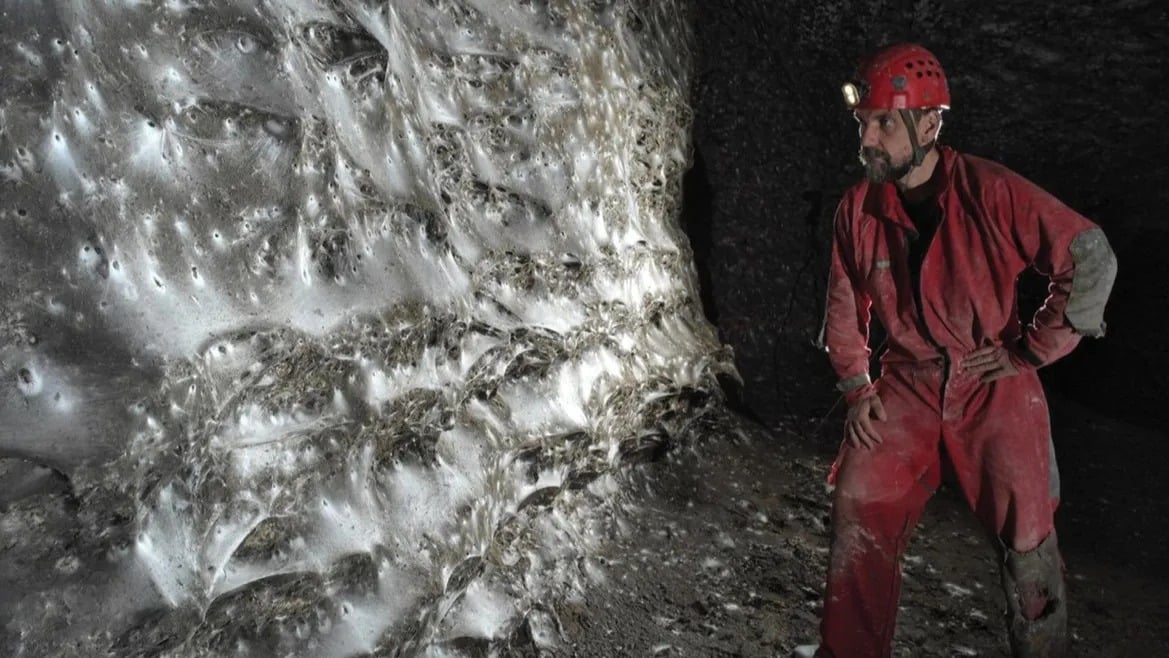
Researchers have found the largest spider web ever recorded inside a sulfur-rich cave along the Greece–Albania border. The "spider megacity" covers an astounding 1,140 sq ft (105 sq m). This is about the size of a small apartment. This remarkable discovery was revealed by biologist István Urák and his team on October 17, 2025.
A group from the Czech Speleological Society — an organization dedicated to the study and exploration of caves — first stumbled upon the site in 2022. Recognizing its unusual size, they alerted scientists. The scientists visited the cave in 2024 and collected specimens from the web. These spiders were later analyzed by Urák. He later organized his own expedition to what is now called Sulfur Cave to study the web and its inhabitants in greater detail.
"You have to experience it to truly know what it feels like," Urák said.
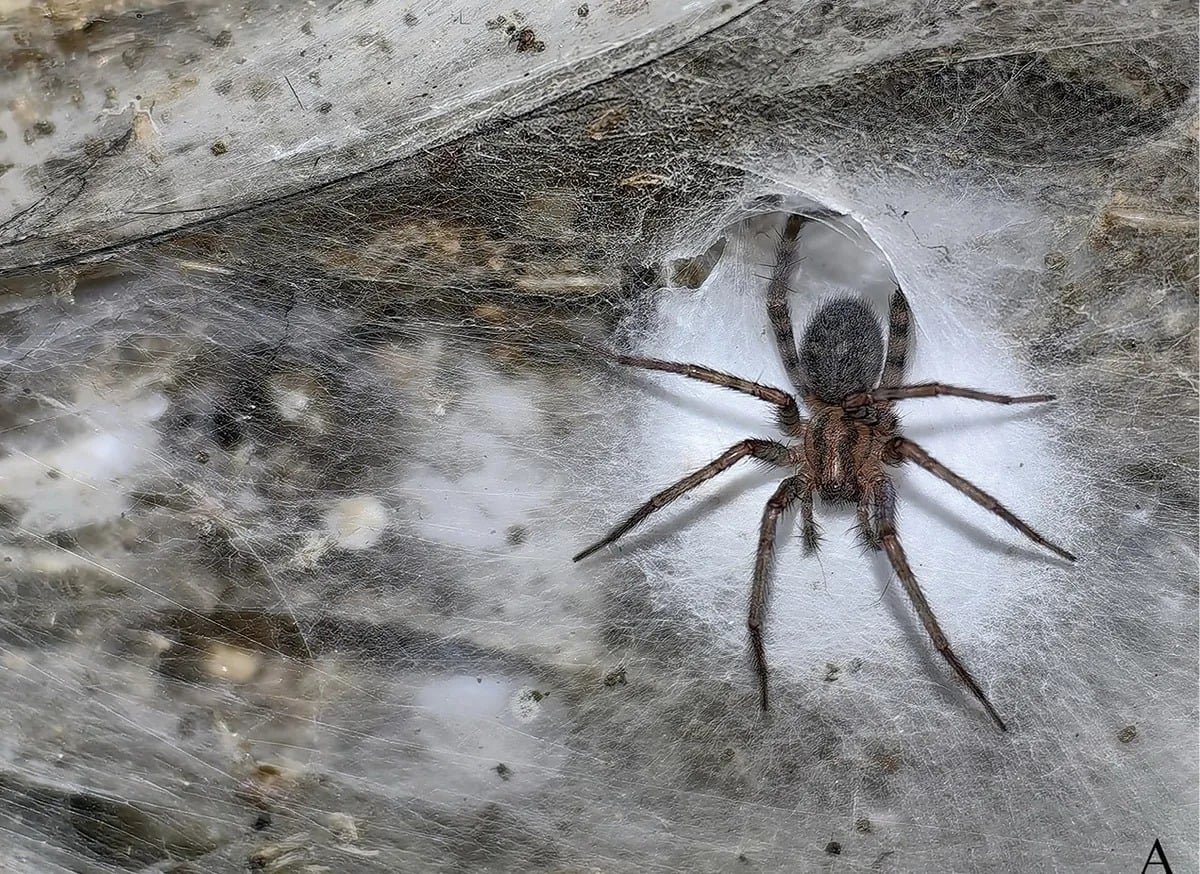
A closer examination revealed that the web is home to around 111,000 spiders. They belong to two different species. About 69,000 are barn funnel weaver spiders also known as common house spiders. Measuring about 12 mm long, they typically build funnel-shaped webs in dark spaces such as attics or basements.
The remainder are a much smaller species called Prinerigone vagans. They are usually 1.7 to 3 mm long. In Sulfur Cave, these spiders do not build webs of their own. Instead, they live on the larger spiders’ webs and ambush passing insects. These two species do not normally live together. However, they are able to coexist in this cave. That is because the larger spiders cannot see the smaller ones, which barely move in the pitch-black environment.
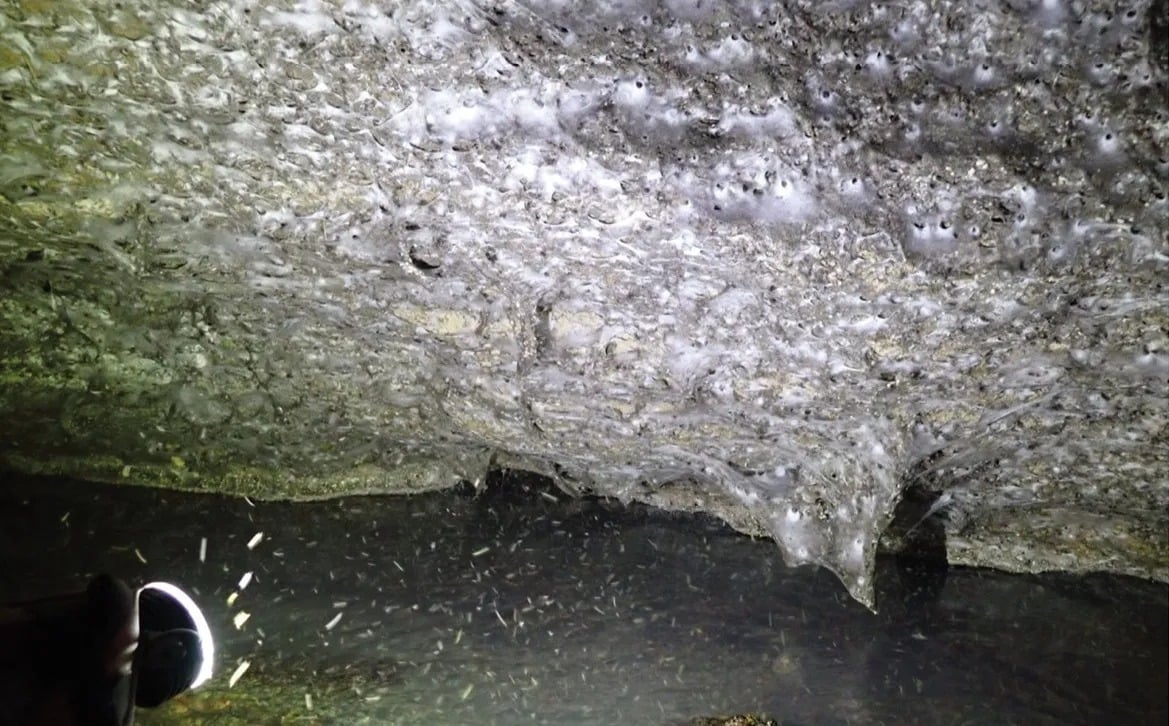
The scientists believe Sulfur Cave provides an ideal environment for this giant web. It is dark, quiet, and protected from the outside world. Hence, the spiders face few predators or disturbances. The cave’s walls are covered with sulfur-eating bacteria, which support large populations of midges and other small insects. This steady supply of prey lets the tens of thousands of spiders live together without competing for food.
Urák and his team plan to continue studying the cave to learn more about its ecosystem and massive spider colony. They also want to study the spiders' genes to understand how they survive in the harsh, sulfur-rich environment.
"We're just beginning to understand how extraordinary this ecosystem really is — and there’s so much more to uncover," Urák said.
Resources: Livescience.com, Smithsonianmag.com, nbcnews.com

Get the Workbook for this article!
Workbook contains: Article, Reading Comprehension, Critical Thinking Questions, Vocabulary in Context (+ answers), Multiple Choice Quiz (+ answers), Parts of Speech Quiz (+ answers), Vocabulary Game (+ answers)Cite Article
Learn Keywords in this Article

46 Comments
 hosejypa-1756215851353 dayswhy so many spiders
- juwusoju-1760326028414 daysso disgusting and creepy
 alishertur0078 dayswhen i read that THAT was a common house spider i froze
 vawunupyvyzy11 daysi don't like spiders ahhhhnhhhhhh
 hawabyhecufi9 daysThey're cute!!!
- puwopiba-1760326027804 daysI AGREE.
- bingletimer14 daysthis is terrifying
- hawabyhecufi16 daysI'm doing a presentation on this wish me luck guys!!😀
 surilimo-1760326026173 daysI am wishing you luck😀
- mewybybylome18 daysJames says: "I wonder how long the spiders took to make the enormous spider web." Grandma says: "I hope no non-scientists find the cave and ruin the spiders' home."
 parasabout 1 monthsoo cool
- parasabout 1 monthwow
 piper20about 1 monthThat is so creepy! I do not think I can sleep again!